
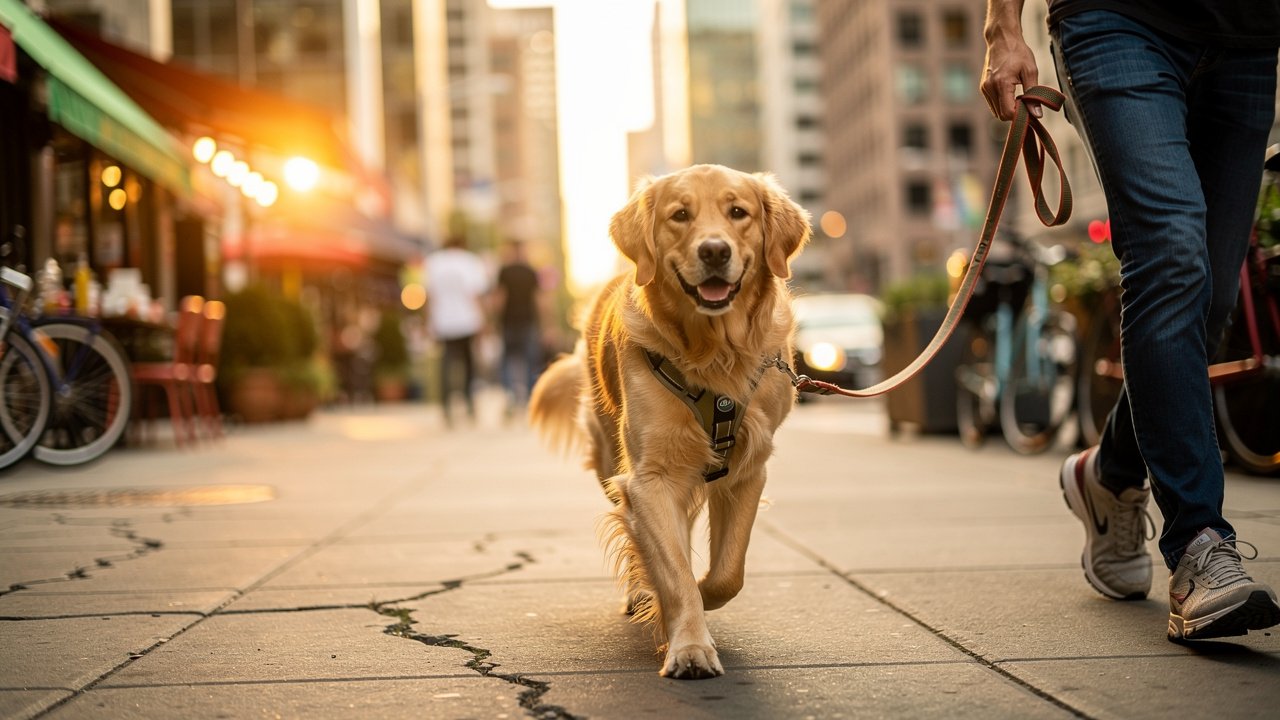
Introduction
City walks often feel messy: honking cars, scooters, food scraps, and a puppy zigzagging at the end of the leash. When every outing turns into pulling, barking, or lunging, even a short walk can feel exhausting.
That is where practical urban dog walking tips change things. With simple gear tweaks, reward-based training, and a few safety habits, I can make busy sidewalks feel like calm practice grounds. PupSG focuses on science-backed, positive methods that fit real life, not perfect TV routines.
In this guide I share clear urban dog walking tips on gear, treats, life-saving cues like Leave It, handling people and other dogs, plus paw and weather safety. Every idea slots into walks I already take, so I do not need extra hours in my day. Keep reading and pick one or two changes to try on your very next city walk.
Key Takeaways
Before I unpack each topic, I like to keep these simple ideas in mind on every walk through town:
The gear I clip on before leaving home already shapes how safe and calm the walk feels. A front-clip harness or head halter often softens pulling without pain. A simple 6-foot leash keeps my dog close enough to avoid sudden hazards in crowds. Small gear changes here often move progress faster than any new cue.
Reward-based training makes city walks smoother and kinder for both of us. When I bring special treats that only appear outside, my dog learns that busy streets predict good things near me. That shift builds focus even when pigeons, food wrappers, or skateboards appear. Over time, my dog looks to me first before reacting.
Essential cues like Leave It and Drop It protect my dog from the random objects that cover sidewalks. I use them for chicken bones, glass, and even dropped medicine. Training these at home first means my dog already understands what to do when we see trouble outside. That preparation can prevent an expensive emergency vet visit.
Calm rules around people and other dogs keep everyone safer in close quarters. I skip nose-to-nose greetings on leash and ask strangers to give my dog space when needed. Simple handling moves help me turn away from trouble without yanking or yelling. My dog learns that I will handle surprises, so he does not need to.
Paw care and basic walk supplies matter just as much as training cues. Hot pavement, winter salt, and broken glass all live on city streets. With a quick surface check, paw balm or booties, waste bags, and water, I cover most daily risks. These small habits add up to a comfortable, healthy city dog.
Choosing The Right Gear For Urban Dog Walks
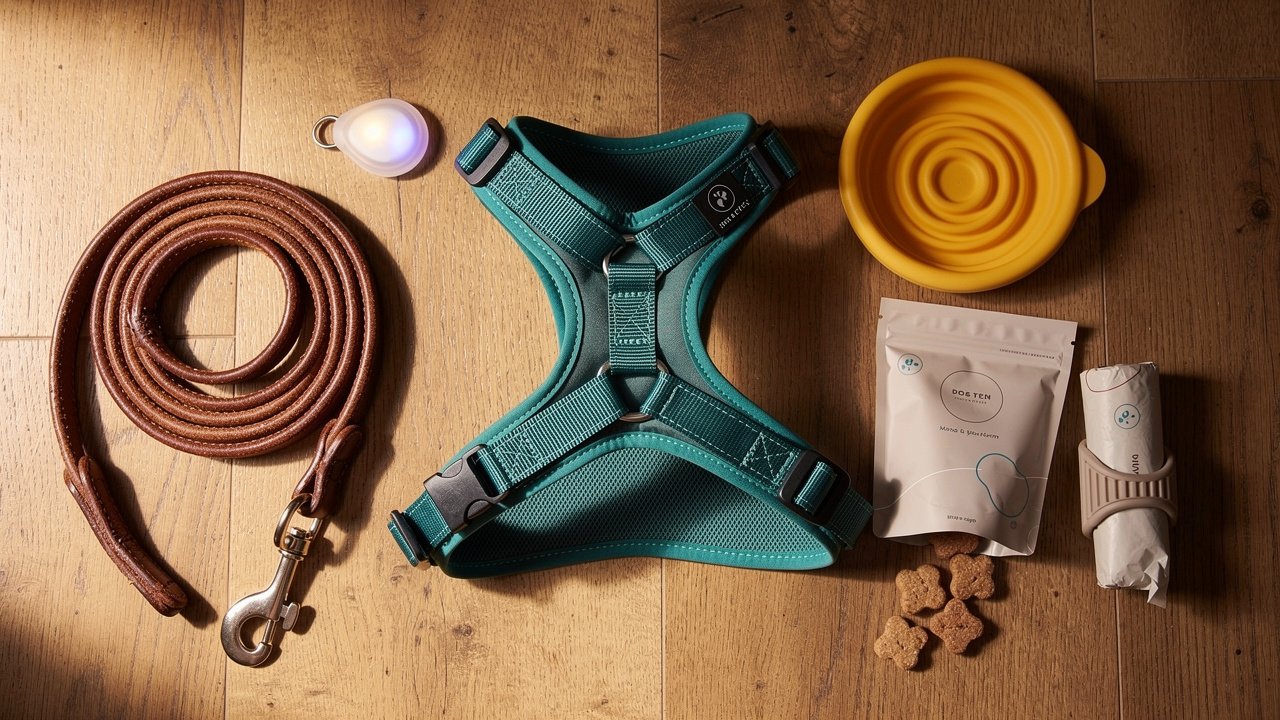
Choosing the right gear for urban dog walks sets the tone for every step outside. With simple, humane tools I keep my dog comfortable while also staying in control around traffic and crowds.
According to the American Pet Products Association, about 65 million US households share life with at least one dog, reflecting how pets are deeply woven into modern family structures as explored in research on the All in the Family dynamic between pets and households. That is a lot of leashes on busy sidewalks, which makes thoughtful gear choices even more important — and research on Behaviors of Shelter Dogs during harnessing and leash walks shows just how much equipment and handling style influence a dog’s comfort and stress levels. For most city routes I prefer a standard 6-foot leash, not a retractable one. Retractable leashes create long, thin lines that tangle around people, bike wheels, and other dogs far too easily.
For pullers, I reach for a front-clip harness or a head halter rather than a choke chain or prong collar. A front-clip harness attaches the leash at the chest so pulling gently turns the body back toward me. A head halter guides the head, which naturally guides the rest of the dog, so I need far less strength in my arms.
I always introduce new gear indoors before I count on it outside. I clip on the harness, feed a handful of small treats, then unclip again so the dog associates the gear with comfort and rewards. The same idea applies to reflective collars, light-up tags, or raincoats for night or wet walks. As PupSG often reminds the community, calm practice at home makes new gear feel normal before the city adds extra pressure.
“The right gear should feel kind to your dog and simple for you to use.” — PupSG training team
Well-chosen equipment is one of my favorite urban dog walking tips because it helps on every single walk. I am not perfect, my dog is not perfect, but the gear quietly supports both of us.
How To Use Positive Reinforcement On City Walks
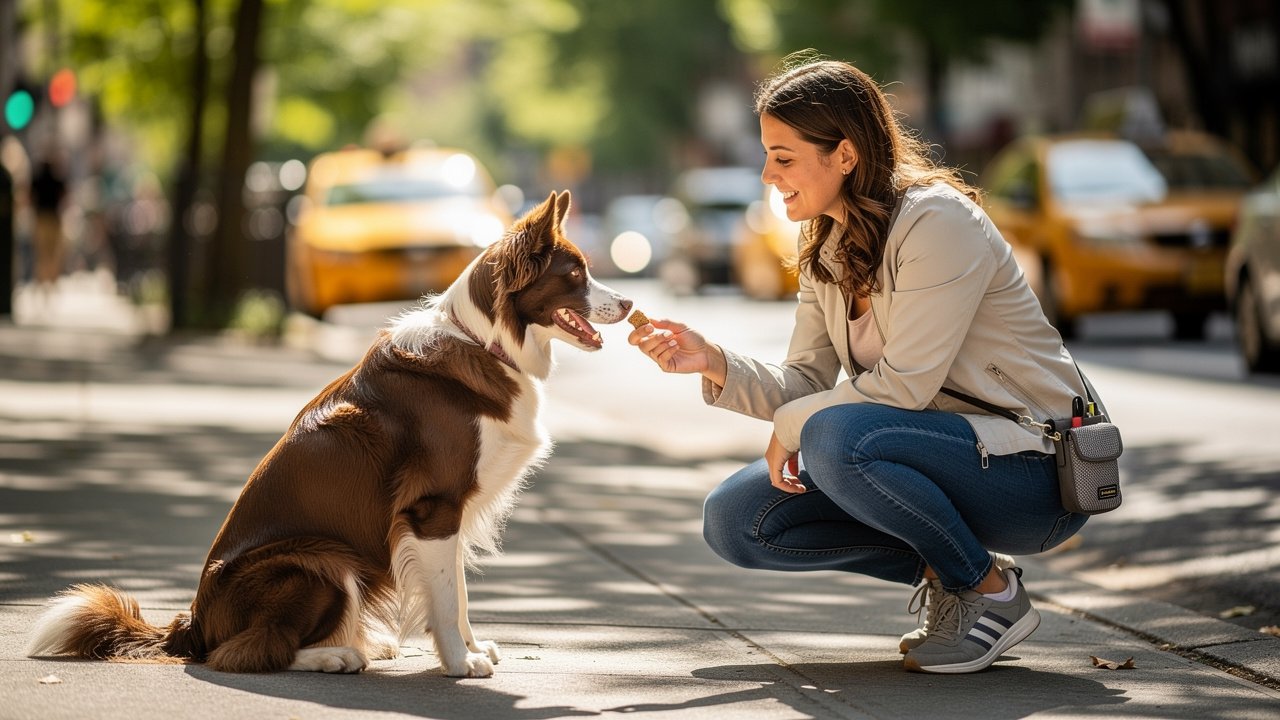
Using positive reinforcement on city walks helps my dog pay attention to me instead of the noise around us. When I reward calm choices, busy streets become training chances instead of constant battles.
The American Veterinary Society of Animal Behavior recommends reward-based methods as the first choice for dog training, because punishment raises the risk of fear and aggression (American Veterinary Society of Animal Behavior). That advice matters even more in cities where stress is already high. Everyday kibble may work in my living room, but it rarely competes with chicken bones and rushing buses — a pattern consistent with findings on what drives Exploring Predictors of US pet owners’ food and treat preferences for their dogs. For outdoor work I bring soft, smelly treats like tiny pieces of deli turkey, cheese, or freeze-dried liver.
I also use rewards before trouble, not only after problems. If my dog is already lunging at a scooter, the treat comes too late to teach much. Instead, I pay for all the small, good choices that happen long before things go wrong.
Some ways I use this on real walks include:
I feed a treat every few steps when my dog walks with a loose leash beside me. This turns the position near my leg into a good place to be, not a punishment. If my dog surges forward, I simply pause and wait for the leash to soften again. The dog learns that pulling makes the walk stop and calm walking makes the walk move.
At crosswalks I ask for a sit and then reward it while we wait. Cars, bikes, and people drift by while my dog earns snacks for keeping paws on the ground. Over many days, the red light automatically reminds my dog to sit. That habit keeps everyone safer at busy corners.
When another dog passes across the street, I mark any moment my dog glances back at me and feed for that choice. The message is simple: looking at me makes good things happen. This quiet pattern reduces barking and lunging far more kindly than yelling or leash pops.
“Reward the behavior you want, not the behavior you do not want.” — common dog training advice
Positive reinforcement is the heart of every set of urban dog walking tips I share. With a treat pouch and a plan, the city becomes one big classroom.
Teaching “Leave It” And Managing Urban Hazards
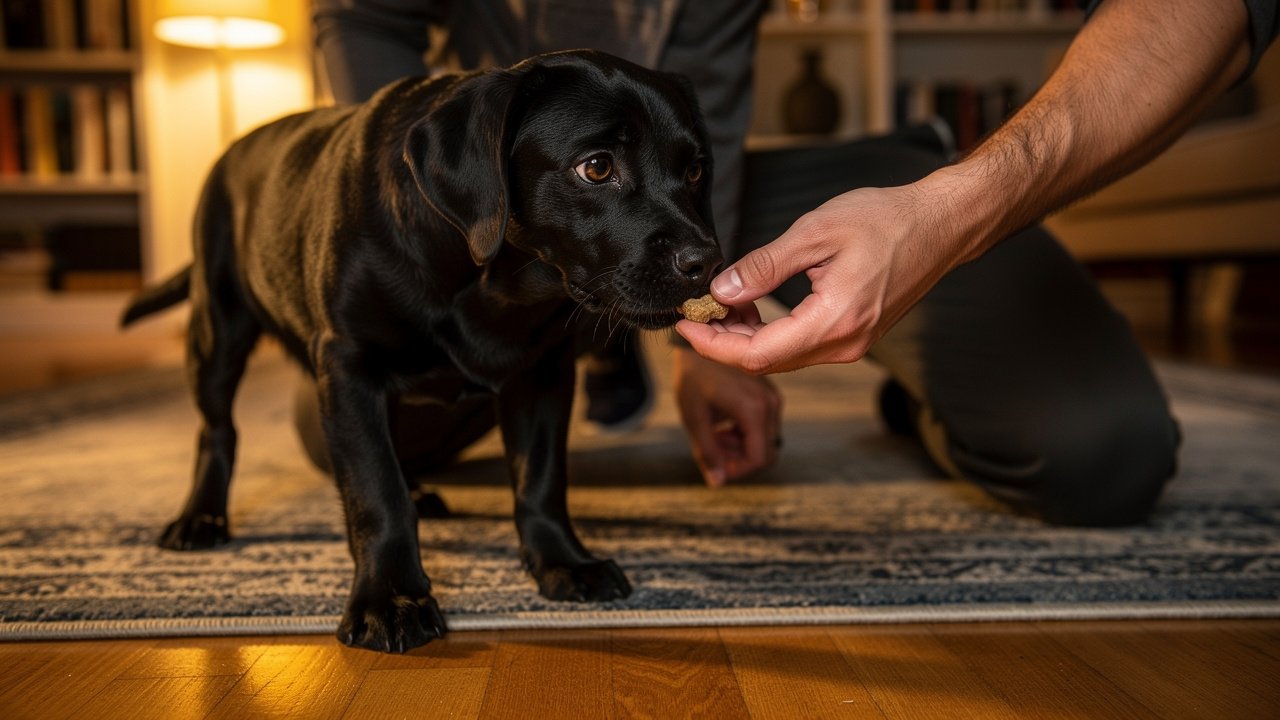
Teaching Leave It and similar cues gives my dog a safety net around urban hazards. City sidewalks often hide glass, chicken bones, and other surprises that my dog finds faster than I do.
Pet insurance data from Nationwide lists foreign object ingestion among the most common emergency claims for dogs (Nationwide Pet Insurance). That means one bad sniff on a walk can lead straight to the vet. So I start Leave It in my living room before I ever depend on it near a food stall or trash can.
Here is the simple Leave It process I follow:
I hold a treat in my closed fist and let my dog sniff and paw. The moment the dog backs off even slightly, I say Yes and drop a different treat from my other hand. After a few rounds, the dog learns that ignoring the fist makes better food appear.
Next I add the words Leave It before I show the closed fist. If the dog backs off, rewards appear again from the other hand. If the dog pushes harder, I stay calm, keep my fist closed, and wait for a pause so the dog still wins by giving up.
When that step feels automatic, I open my hand so the treat lies in my palm. I say Leave It, and if the dog moves toward the food I calmly close my hand. When the dog looks away or sits instead, I pay well from the other hand and then pick up the original treat.
Finally I place the treat on the floor with my foot ready to cover it. I say Leave It, and I only lift my foot and reward when the dog chooses to ignore the food. Later I repeat the same game in hallways, lobbies, and then quiet sidewalks.
I also teach Drop It or Trade for those times when my dog still manages to grab something. I start with a boring toy, offer a very tasty treat, and praise the moment the dog spits out the toy. Over time I add higher-value items outside so the cue works with real-life trash. Among all urban dog walking tips, these two cues give me the most peace of mind.
How To Handle People, Other Dogs, And Reactive Moments
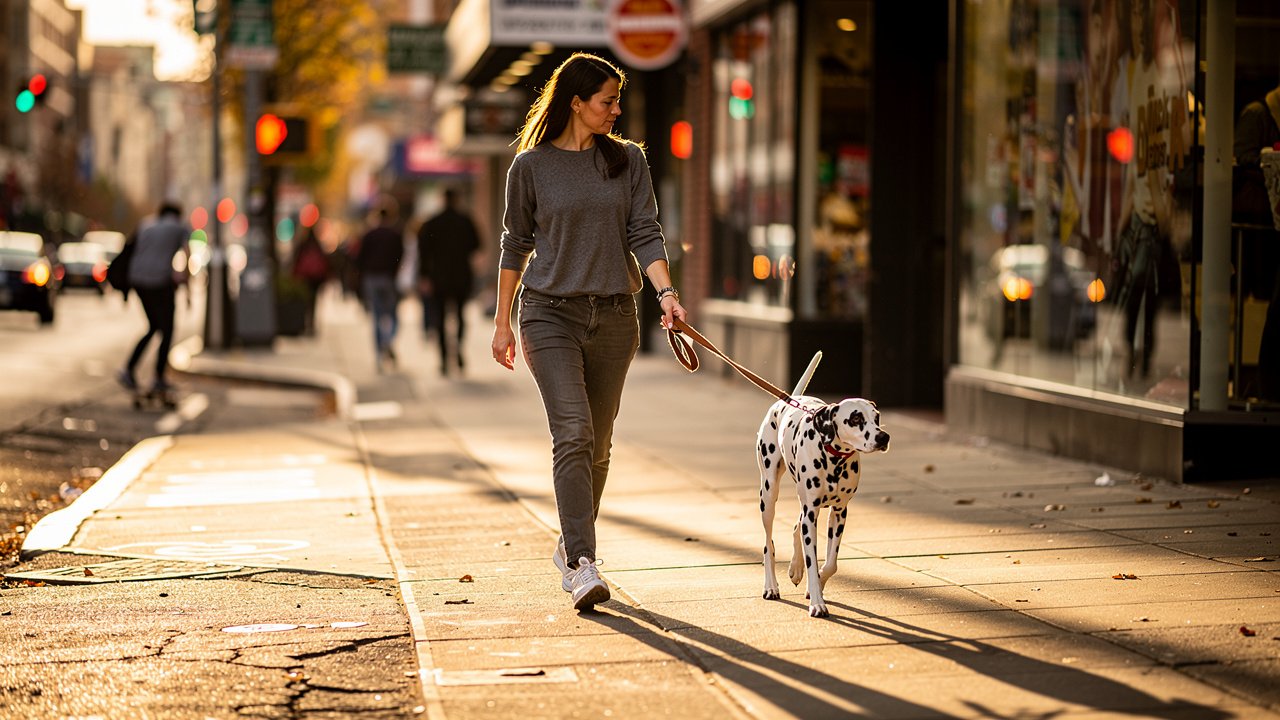
Handling people, other dogs, and reactive moments on city walks starts with clear rules and a calm plan. When I decide in advance how I will respond, surprising moments feel far less scary.
The American Kennel Club notes that many bite cases involve unfamiliar people approaching or touching dogs without permission (American Kennel Club). That is one reason I do not treat busy sidewalks as social hours for my dog. On-leash greetings force dogs nose to nose with tight lines and tense owners, which leaves little room for natural body language. I usually offer a polite smile and a quick No, we are training right now if someone asks for a meet up.
I apply the same idea with people who want to pet my dog. If my dog leans away, licks lips, or freezes, I step in front and say We are giving him some space today. Protecting my dog this way builds trust that I will handle social pressure, so he does not need to snap or bark.
For sudden triggers like loose dogs, skateboards, or loud machinery, I rely on three simple handling moves:
U-Turn: I spot the trigger, shorten the leash to my side, and calmly turn in the opposite direction. I move with purpose so my dog just follows the change of path. Once we have a few steps of distance, I feed a small handful of treats. Over time, my dog learns that turning with me is safe and rewarding.
Arc By: I place my dog on the side away from the trigger with the nose slightly behind my toes. I walk in a gentle curve so my body stays between my dog and the problem. This wider path lets my dog glance at the trigger without feeling trapped. As soon as we pass, I praise and feed.
Call To Front: I step back in an L shape and call my dog toward me, then feed several treats while the trigger passes. Keeping the leash short but soft helps my dog focus on my hands, not the scary thing. When the trigger is gone, I say Let us go and continue, still paying for calm steps.
If reactivity shows up often, I add slow, structured practice and sometimes reach out to a certified trainer such as a CPDT-KA for extra help, since understanding How Changing Portraits and public perceptions of dog behavior can inform more compassionate and effective approaches to reactive dogs. Communities like PupSG also share real-life stories that remind me I am not the only one facing these moments, and urban dog population studies such as Population Demographics of Owned dogs highlight how dense city environments create unique social pressures for both dogs and their owners. All of this fits neatly inside wider urban dog walking tips that keep both dogs and people safe.
Paw Protection, Weather Safety, And Urban Walk Essentials
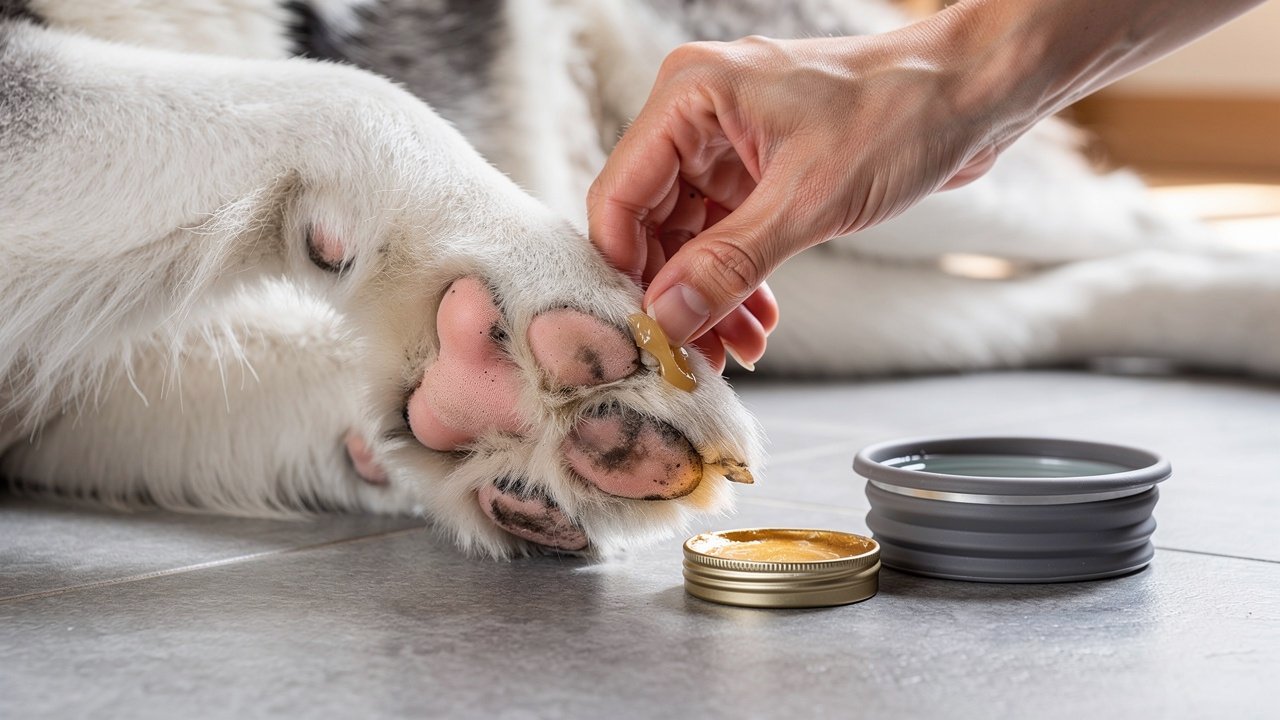
Paw protection, weather safety, and a few simple supplies keep my dog physically safe during city walks. Urban streets can burn, chill, or cut paws if I forget about what is underfoot.
According to the American Kennel Club, when air temperature reaches about 85°F, asphalt can heat up to roughly 135°F, which can damage paw pads (American Kennel Club). I use the five-second test by pressing my bare hand on the pavement. If I cannot hold it there comfortably, I choose shade, grass strips, or shorter outings. In cold climates, salt and de-icers can sting paws and cause cracking, so I like wax-based paw balms or well-fitted booties.
Year round I check paws after each walk for small cuts, glass, or burrs. A quick rinse at home removes grit and any chemicals from the street. Soft, conditioned pads handle rough sidewalks far better than dry, cracked ones.
My go-to urban walk kit includes:
Waste bags so I can always clean up. Dog waste carries parasites that can spread to other animals and people, according to the Centers for Disease Control and Prevention (Centers for Disease Control and Prevention). Picking up every time keeps shared spaces healthier. It also shows neighbors that dog owners care about the community.
A collapsible bowl and water for both me and my dog on walks longer than twenty to thirty minutes. Heat, humidity, and hard surfaces all increase how quickly dogs overheat. Many city dogs only have concrete under their paws, so there is less cool ground to rest on. Regular small water breaks lower this strain.
Reflective gear or a light-up collar so drivers and cyclists can see us in low light. I clip a small light on the leash and choose harnesses or collars with reflective trim. This simple habit adds a bright outline to my dog at night. Among all urban dog walking tips, visibility is one of the cheapest to follow.
“Check your dog’s paws as carefully as you check your own shoes.” — PupSG care tip
Lace Up And Lead The Way
Lacing up and leading the way with confidence turns daily city walks into calm routines. With a few new habits, every block can build skills instead of tension.
I like to treat each walk as a short training session, not just a bathroom break. That means one small goal at a time, such as three good Leave It reps or five calm passes by parked bikes. Over weeks, these tiny efforts stack into big changes.
PupSG is built around this style of realistic progress, especially for busy families who squeeze walks between work, school, and errands. Instead of chasing perfection, I practice one or two urban dog walking tips from this guide and celebrate every small win. Step by step, city walks start to feel lighter for both me and my dog.
Conclusion
All of these urban dog walking tips point toward the same idea: city walks get easier when I blend kind training with smart safety habits. Gear, rewards, and clear cues work together so my dog can handle traffic, crowds, and surprises without constant tension.
With a front-clip harness and simple leash, I keep control without pain. With tasty rewards, I teach my dog that staying near me during noise and motion pays off. Leave It, Drop It, and calm handling moves give us backup plans when the sidewalk throws something new our way.
Paw care and simple supplies fill in the rest of the picture, protecting my dog from hot pavement, winter salt, and hidden debris. When I add in steady practice, city walks turn from stress into daily bonding time. If I want more step-by-step help or myth-free advice, PupSG and its community offer ongoing ideas that line up with everything in this guide.
Frequently Asked Questions
Question: What type of leash is best for walking a dog in the city?
A standard 6-foot leash is best for most city walks. It gives enough freedom for sniffing while still keeping my dog close in crowds. I avoid retractable leashes because they create long, thin lines that tangle around people and bikes. In very tight spaces, I shorten the leash even more for safety.
Question: How do I stop my dog from pulling on the leash during city walks?
I start with a front-clip harness so pulling no longer feels rewarding. Then I pay my dog every time the leash goes slack, even for a second. If the dog pulls, I pause until the leash softens again. Over many walks, this positive reinforcement teaches that walking beside me makes the walk move.
Question: Is it okay to let my dog greet other dogs on a city walk?
I usually skip on-leash nose-to-nose greetings in crowded areas. Tight leashes and close quarters make it hard for dogs to read each other and can spark scuffles. Instead, I save dog social time for controlled off-leash spaces like safe dog parks or playdates with known friends. Walks stay calmer that way.
Question: How do I know if the pavement is too hot for my dog’s paws?
I use the five-second test by pressing my bare hand or foot on the pavement. If I cannot hold it comfortably for five seconds, it is too hot for my dog. On very warm days, I walk early in the morning or later in the evening. Shade and grass strips also help protect paw pads.
Question: How can PupSG help me with urban dog walking challenges?
PupSG offers positive reinforcement guides, gear advice, and real-life tips shaped by busy city living. I can learn simple leash skills, step-by-step cue training, and even how to structure short practice moments into daily walks. The friendly PupSG community also shares wins and struggles, which makes learning feel far less lonely.
Leave a Reply