
Introduction
Bringing a new puppy home feels exciting, messy, and a little out of control. One minute there is a sleepy fluff ball, the next there is a chewed slipper and a surprise puddle on the floor. In those moments, many people rush online to figure out how to train a puppy without feeling overwhelmed.
It is very common to wonder if every choice is right, from which treats to buy to whether a crate is kind. The good news is that puppies do not need a perfect trainer. They need calm, clear guidance and a few simple rules that everyone in the home follows.
In this guide, we at PupSG share practical, science-based ways to handle everyday puppy training. We will cover trust building, daily routines, socialization, basic cues, and how to handle habits like nipping or pulling. By the end, training should feel less confusing and more like a simple plan that fits into a busy day.
Key Takeaways

Before we dive deeper, here are the main ideas to keep in mind.
Start with rewards for behaviors you like and keep sessions short and frequent so your puppy stays interested. This makes how to train a puppy feel lighter and more playful and builds a strong bond instead of stress.
Use the same rules and words across the whole household and rely on tools such as a crate, baby gates, and a house line. These tools prevent mistakes before they happen, keep everyone calmer, and make training part of the routine instead of an extra chore.
Focus on early socialization, gentle handling, and patience with accidents and missteps. Progress matters more than perfection, and small wins each day add up over time so your puppy feels safe enough to learn.
Building Trust and Setting Up for Success

Training starts the moment a puppy walks through the door. Every cuddle, play session, and snack teaches something, even if no one has said the word “sit” yet. When we think about how to train a puppy, it helps to remember that the first goal is not a list of tricks; it is a safe relationship.
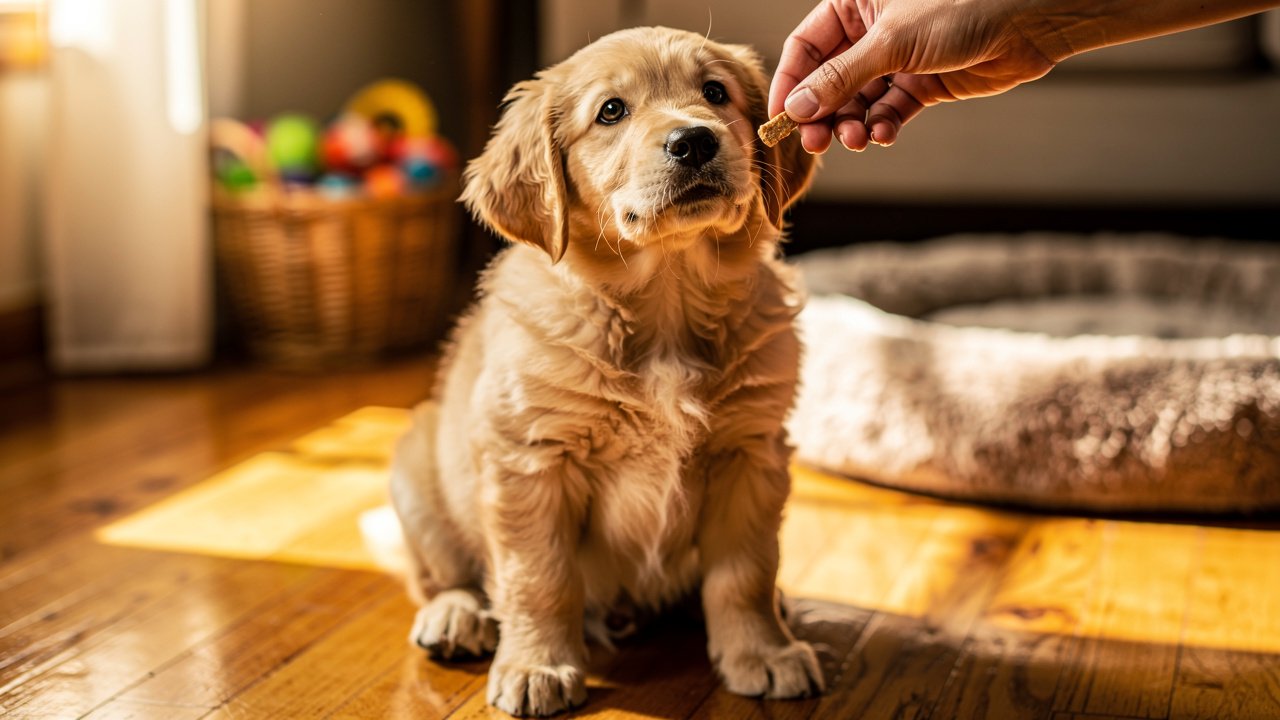
Positive reinforcement sits at the heart of that relationship. We notice and reward behaviors we like with treats, praise, or play. When a puppy sits instead of jumping, or chooses a toy instead of a table leg, we pay well and pay fast. Over time, the puppy repeats those choices because good things follow.
“What you reward, you get more of.” — Common saying in reward-based dog training
Harsh punishment does the opposite. Yelling, shaking a collar, or forcing a puppy into position can shut them down or make them anxious. They might stop a behavior in the moment, but they do not learn what to do instead and may start to feel unsure around the very people who should feel safest.
Consistency inside the home makes everything easier. If one person allows the puppy on the couch and another does not, the puppy gets mixed messages. When everyone uses the same cues, such as “sit” or “down,” and the same rules, learning speeds up. A short family chat before the puppy arrives can save weeks of confusion later.
One simple trust exercise is hand-feeding part of each meal. Instead of putting all the food in a bowl, sit with the puppy and feed kibble from your hand. This teaches that good things come directly from you and that it feels nice to be close. At PupSG, we often suggest hand-feeding in the first weeks because it fits into a normal meal and quietly builds the bond that later training depends on.
Essential Routines and Management Tools

Good management is like baby-proofing for dogs. Rather than waiting for a puppy to chew a cable or have an accident on the carpet, set up the home so those things are less likely. This is kinder for the puppy and far less stressful for a busy household.
A crate is one of the most helpful tools. When introduced gently, it works as a cozy den where the puppy can rest, chew a safe toy, and switch off from the noise of the house. You can feed some meals inside the crate, scatter treats on the bedding, and keep the door open at first so the puppy chooses to wander in. At night, keeping the crate close to the bed helps the puppy feel less alone and makes it easier to hear when a potty break is needed. Used this way, crate training feels safe and comfortable.
Potty training goes best when we think about prevention rather than blame. Young puppies need to go out after every nap, meal, drink, and lively play session. A simple house training routine can look like:
Take your puppy to the same outdoor spot after naps, meals, drinks, and play.
Stand in a small area and wait quietly so they can focus.
The moment they finish, praise and offer a tiny treat.
If an accident happens indoors, clean the spot with an enzymatic cleaner and adjust the schedule instead of scolding.
Active supervision fills the gaps. Being in the same room is not enough if we are glued to a phone or laptop. Puppies can find trouble in seconds, so when we cannot watch closely, we use tools such as:
Baby gates to block stairs or carpeted rooms
A light house line attached to their collar so we can guide the puppy away from trouble spots without grabbing at their neck
These small barriers prevent many problems before they start.
A simple daily rhythm helps both puppy and people. You might start with a potty break, followed by a tiny training session with two or three sits, then a short play. After another quick potty break, the puppy settles in the crate for a nap while the family works or studies. Repeating this pattern through the day teaches the puppy what to expect and keeps energy and toilet needs under control.
Socialization and Teaching Basic Commands

Between eight and sixteen weeks, a puppy’s brain is soaking up new information very quickly. This window is when many long-term feelings about the world form. When we think about how to train a puppy for real life, this period matters as much as any formal cue.
Socialization means gentle, positive exposure to new sights, sounds, surfaces, and people. For example:
Sit at a distance from a quiet street so the puppy hears cars without feeling trapped on the sidewalk.
Ask friends of different ages and appearances to offer treats while the puppy stands or sits on the ground, rather than being loomed over.
Before vaccines are complete, skip dog parks and instead arrange calm playdates with healthy, vaccinated adult dogs in safe spaces.
“Socialization is not about flooding puppies with experiences; it is about creating good experiences.” — Common guidance from modern dog trainers
Daily body handling is another part of socialization. Touch ears, paws, tail, and mouth for a second or two, then feed a tiny treat. Short, happy vet visits where staff offer snacks can help as well. These small moments teach the puppy that hands near their body are a sign of good things, not a threat.
Foundational cues help a puppy live smoothly with people. At PupSG we like a simple pattern called Cue–Lure–Reward:
Say the cue one time.
Use a treat in your hand to guide the puppy into the position.
The instant they get it right, say a happy marker word such as “Yes” and give the treat.
For sit:
Hold the treat just above the puppy’s nose, say “sit,” and slowly move your hand up and back.
Most puppies tip their head up and lower their rear.
The moment the bottom touches the floor, mark and reward.
For down:
Start from a sit.
Bring the treat to the nose, move it straight to the floor, then slowly forward so the puppy stretches out and lies down.
The instant elbows and chest touch the ground, mark and reward.
Stay builds self-control in tiny steps:
Ask for a sit, raise a flat hand in front of the puppy, and say “stay.”
Take one small step back, return, and reward if they held still.
Use a short release word such as “free” to end the exercise.
Keep sessions short, only three to five minutes, so the puppy stops while still eager to play again next time.
Handling Common Puppy Behavior Challenges

Every puppy will test limits. Chewing, nipping, barking, and jumping do not mean a dog is stubborn or trying to be in charge. They show that the puppy is curious and full of energy and that we have more teaching to do.
Nipping is one of the first challenges. Puppies explore the world with their mouths, and human skin can become an easy target during play. When teeth touch skin, give a sharp “ouch,” then calmly end the game for a few seconds. This brief pause tells the puppy that biting too hard makes fun stop. Then offer a chew toy so they learn what is fair to bite.
Jumping on people often comes from happiness and a wish for attention. Instead of pushing the puppy down, ask for a sit the instant they rush toward you. When the back end hits the floor, give all the eye contact, petting, and kind words they were seeking. If they jump again, turn away and quietly wait for another sit. Over time, the puppy learns that calm behavior opens the door to greeting time.
Loose-leash walking is another common struggle. Many puppies pull simply because the ground smells amazing and they move faster than we do. To teach better habits:
Start in a quiet area with few distractions.
The moment the leash tightens, stop moving.
When the puppy looks back or steps toward you so the leash loosens, praise and move forward again.
A quick game or play session before the walk helps them burn off the sharpest edge of energy.
When things feel hard, it helps to remember that misbehavior is not spite. Our job is to guide and protect, not to punish. With patience and clear steps, and with support from resources such as PupSG, most problem habits fade as the puppy grows and the training settles in.
Conclusion
Training a puppy does not require special talent or strict drill sessions. It asks for patience, clear rules, and a habit of noticing the good moments and rewarding the good stuff. Each tiny success, from a single sit to a quiet pause on the leash, shapes the adult dog that will share the home for years.
By focusing on trust, simple routines, gentle socialization, and kind answers to common challenges, anyone can learn how to train a puppy in a way that feels kind and practical. Progress may feel slow on some days, yet steady effort always adds up. For more step-by-step help and a friendly community of fellow dog lovers, explore the puppy training guides at PupSG, and keep celebrating every small win with that wagging tail.
“Train the dog in front of you, not the one in your head.” — Common saying among dog trainers
FAQs
Question 1: What Age Should I Start Training My Puppy?
We recommend starting as soon as the puppy comes home, often around eight weeks old. At this age they can learn name recognition, gentle handling, and simple cues such as sit and come. Keep sessions very short and fun so they see training as play. When people ask how to train a puppy, our answer is to begin early with many tiny, positive moments.
Question 2: How Long Should Puppy Training Sessions Be?
Short and frequent sessions work best for young dogs. Aim for three to five minutes at a time, two or three times a day. Stop while the puppy is still interested so they stay excited for the next round. Remember that training also happens in daily life during feeding, walks, and play.
Question 3: What Is the Most Effective Method to Train a Puppy?
The most effective method is positive reinforcement, where we reward the behaviors we like right away. When a puppy sits calmly or comes when called, we give treats, toys, or praise. This clear, kind feedback helps them repeat those choices. Harsh methods tend to create fear and confusion, so we avoid them and focus on clear communication instead.
Question 4: How Do I Stop My Puppy From Having Accidents in the House?
Prevention is the main tool for house training. Take the puppy outside after every nap, meal, drink, and play session, and stay nearby to praise them right after they finish. Indoors, watch closely for sniffing or circling, and use a crate when you cannot supervise. If an accident still happens, clean the spot with an enzymatic cleaner and tighten the schedule, rather than scolding, so the puppy can keep learning with confidence.
Leave a Reply