Structuring Your Ten Minute Training Session
A simple structure stops a ten‑minute block from turning into random commands. Before starting, decide what the main goal is for that day. Then use this pattern to keep things on track and fun.
- Warm up (1–2 minutes)
Start with something the dog already knows well, such as sit, touch their nose to your hand, or name recognition. This builds confidence and helps the dog tune in to the handler, just like a warm up in sport or a quick easy level in a game. - Core skill (3–5 minutes)
Focus on one main skill. This might be stay, loose lead walking in the hallway, or recall across the living room. Keep the steps small so the dog wins often. If they fail more than twice in a row, make the task easier. - Add a small twist (2 minutes)
Keep practising the same skill but change position, add a mild distraction, or work in a slightly different room. This teaches the dog that the cue still matters even when the scene is new. - Cool down (1 minute)
End with something easy and fun. Many families finish with a quick trick like paw or spin, followed by praise, play, or a short tug game. Stopping on a win leaves the dog keen for the next session.
A sample weekly focus plan might look like this:
| Day | Main Skill Focus |
|---|---|
| Monday | Sit and short stay |
| Tuesday | Recall indoors |
| Wednesday | Loose lead walking in hallway |
| Thursday | Down and settle on mat |
| Friday | Leave it with simple items |
| Saturday | Recall in garden |
| Sunday | Trick training and review |
Adapting The Framework For Puppies Versus Adult Dogs
Different ages need slightly different plans, even when the ten‑minute structure stays similar.
- Puppies (8 weeks to ~6 months)
- Very short bursts, often just 3–5 minutes
- Several mini sessions per day
- Focus on socialisation, house training, name, sit, and gentle recall
- Adolescent dogs (~6 to 18 months)
- Can usually manage full ten‑minute sessions
- Often have high energy and get distracted easily
- Focus on impulse‑control games, loose lead work, and listening around mild distractions
- Adult rescue or untrained dogs
- May come with habits that do not fit well in a family home, though many wonder can your family dog become an assistance dog with proper training
- Need patience, clear communication, and rewards that really matter to them
- Aim to build trust first, then add skills in small steps
- Senior dogs
- Enjoy training too, but may tire faster or have sore joints
- Shorter sessions with soft surfaces and more mental puzzles than fast action
“A few minutes of thoughtful practice beats an hour of frustration.” – common reminder used by many dog instructors
Establishing Consistency And Family Involvement In Dog Training
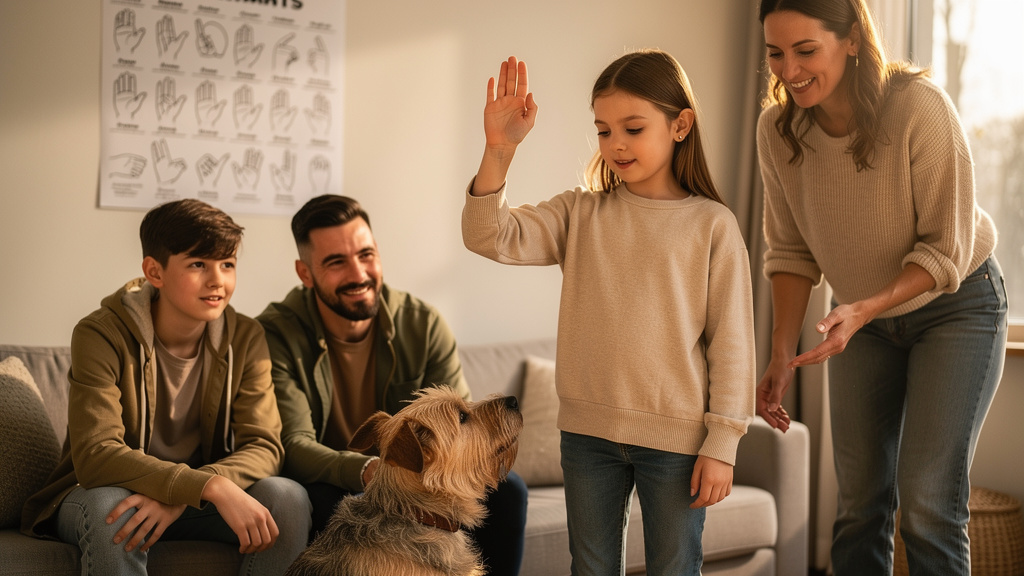
A dog cannot read house rules on a wall. They only know what people show them through actions and repeated patterns. When one person allows jumping on the sofa and another shouts about it, the dog has no way to guess which rule will apply. This kind of mixed message can lead to stress and behaviour issues. Consistency across the whole household is one of the most powerful tools in family dog training.
Bringing every family member into the plan also spreads the work. Children feel proud when the dog listens to them, parents get support, and the dog learns to respond to more than one handler. With a clear system, training time can feel more like a shared game than a chore, which fits well with families who already enjoy strategy games and guides from places.